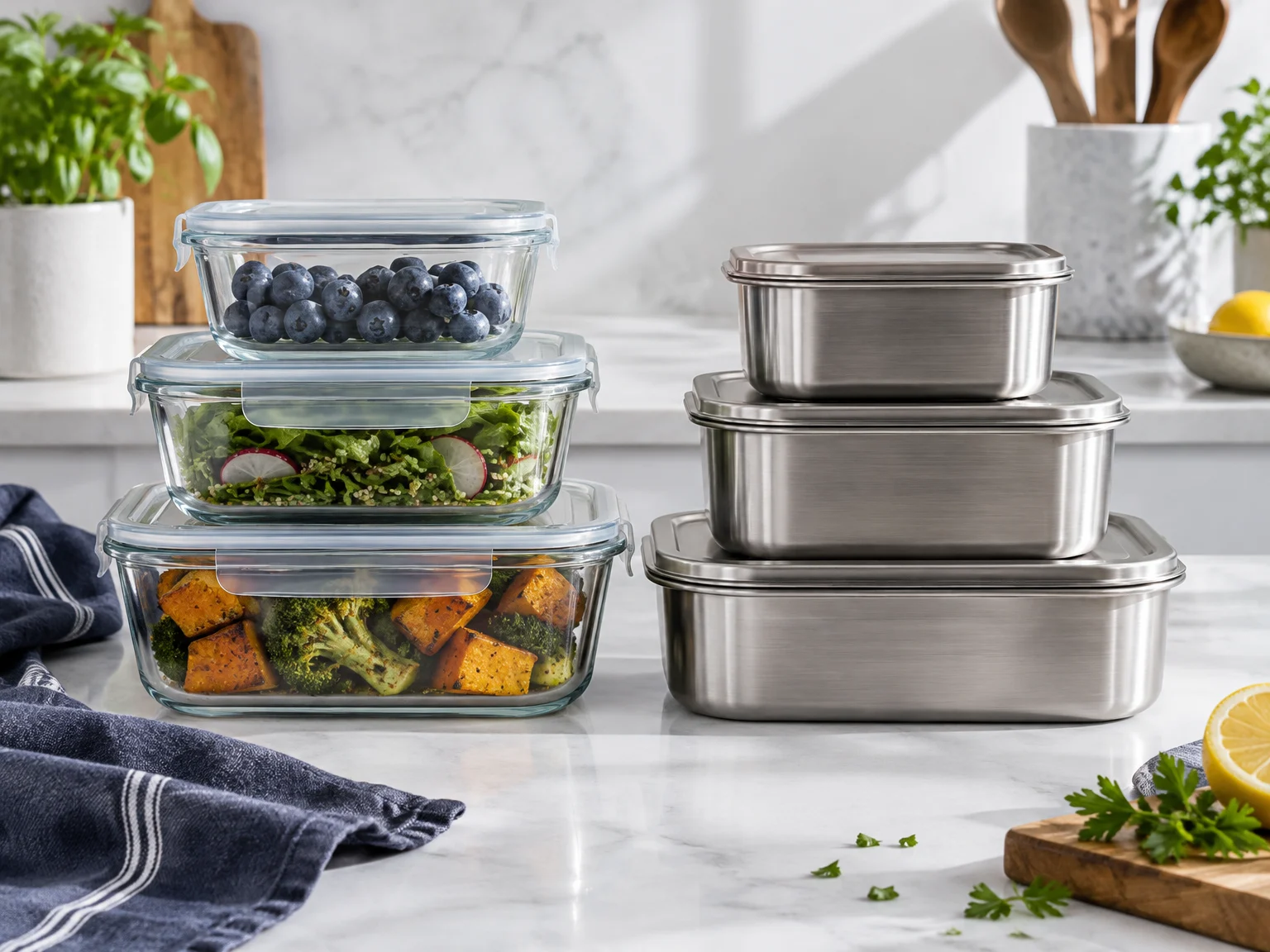
Glass and stainless steel containers each have practical considerations. Rather than treating one material as the best choice for everyone, compare how the container’s features fit your intended use, storage space and routine.
Visibility is one difference to consider. Transparent glass can make contents easier to see without opening a container, while opaque stainless steel does not provide the same view. If identifying stored food at a glance matters to you, consider how that affects everyday use.
Weight may also influence your choice. The weight of a container depends on its design and size, but material can be one factor when comparing options for carrying, handling or stacking. Check the manufacturer’s listed dimensions and product information for the particular container you are considering.
Care instructions vary by product. Before cleaning a container or using it in an appliance, follow the manufacturer’s guidance for that specific item, lid and any included components. Do not assume that a container is suitable for a dishwasher, microwave, oven or freezer based on material alone.
There is no product testing or model-specific recommendation in this comparison. Review the specifications and care instructions for each candidate, then weigh visibility, handling and intended use against your own needs.
Affiliate disclosure: As an Amazon Associate I earn from qualifying purchases.
Browse glass food storage containers on Amazon (paid link). Compare current listings and manufacturer details before buying.
Leave a Reply